
Podcast: Play in new window | Download (Duration: 42:36 — 19.5MB) | Embed
Subscribe: RSS
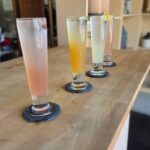
Shimizu Sake cocktails.
Bruce and Karen Shimizu, the co-owners of Shimizu Sake, join Herlinda Heras and Daedalus Howell on Brew Ha Ha. This is their first time on the show. We have also had other sake makers on the show before. Hachidori Sake joined us on this episode of Jan. 9, 2025. Also, Omurasaki Sake was here on this episode on January 26, 2023. Shimizu is the first place in Sonoma County where a sake brewery and a tasting room are open in the same location.
Sake is brewed from cooked rice, and it resembles beer rather than wine in its process. Bruce’s great grandmother in Cotati made sake at home. He was interested finding ways to carry on his Japanese heritage and traditions. He also started the Sonoma County Taiko drumming group, so brewing sake locally was another way to do that.
Visit Russian River Brewing Co. in Santa Rosa on 4th St. and at their big Windsor location. Check out their website and socials for up-to-date hours, menus, beers and more.
Herlinda remembers tasting sake when her father was in the Navy and came home with some sake from trips to the Pacific. Bruce remembers his first taste of high-quality sake, after only knowing it from the common quality stuff from what they had at home.
Koji for flavor.
Bruce explains that to make sake they use koji (Aspergillus oryzae) which which is rich in flavor. It is the same fungus in soy sauce and miso. (Umami is merely the Japanese word for ‘flavor’). So sake goes well with flavorful foods. Bruce likes to marinate pork or fish, along with vegetables, in koji. After they make sake, the remaining solids or “sake lees” are called sake kasu or just kasu which also contains the active yeast cultures from the sake. That also makes a great marinade. They will even give some kasu to local chefs who are interested.
Shimizu Sake is the exclusive sake sponsor of the Many Moons Festival on Oct. 3.

Visit our sponsor Pro Chiller online for all the info about their new CO2-based Pro Green Solutions.
Bruce calls his product a California sake, using locally sourced water and rice. Bruce explains that he wanted to do things that they won’t do commercially. Other brewers won’t do something that is not tested. A small brewery allows for this kind of creative freedom.
Then his son suggested they expand their product line into two popular styles. He saw salzers and low-alcohol cocktails. People can enjoy the flavors of sake in different ways.
Gravenstein apples, Meyer lemons, prickly pear/ dragon fruit. They are experimenting with agave and monk fruit. They also are using finger limes for their unique flavor and texture.